Automation & Robotics
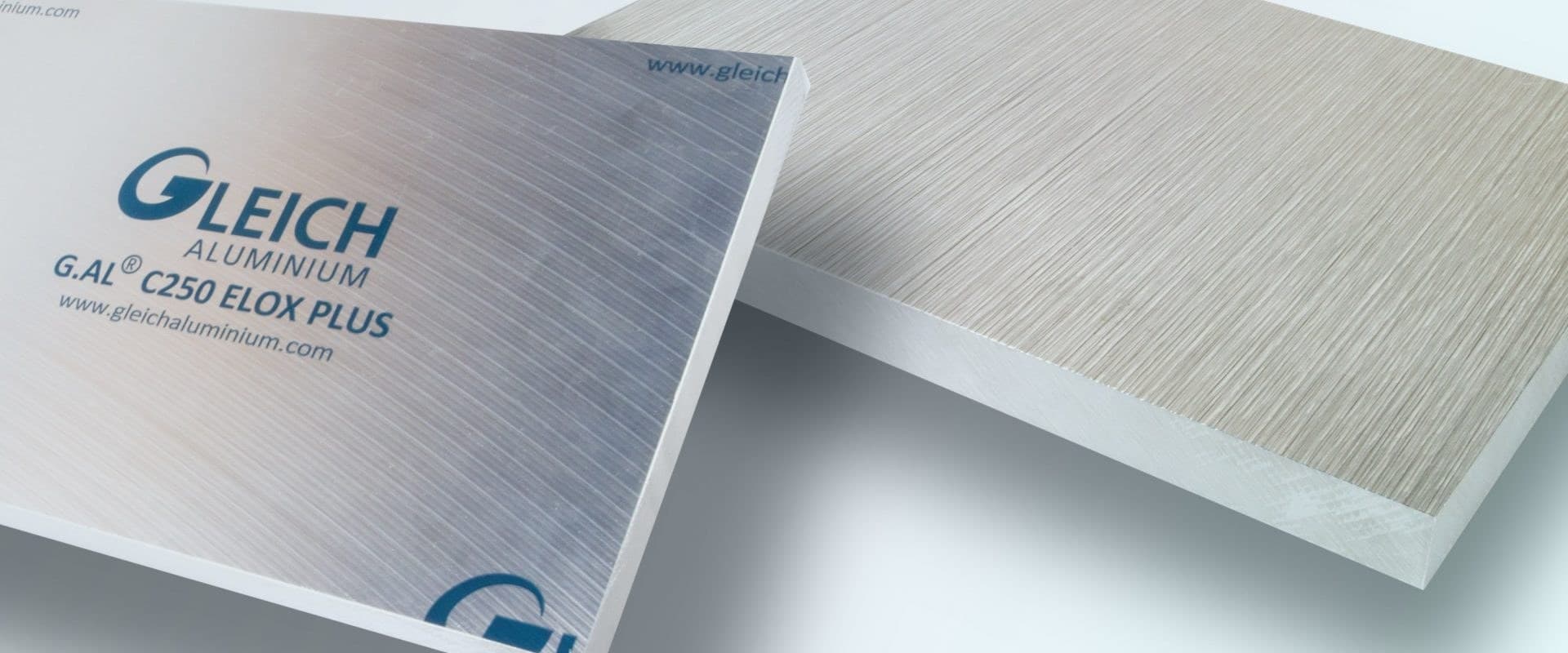
G.AL® Cast Plate for Automation and Robotics
Base plates, mounting plates and end-of-arm tooling
Automation cells are built outward from flat plate. The base plate carries the datums for everything bolted to it, so the question is not whether the plate is flat when it arrives but whether it is still flat once a bolt pattern and a few pockets have been cut into it.
On the moving side of the cell the question changes to weight. G.AL® plate is roughly a third the weight of steel, which on end-of-arm tooling converts straight into payload headroom and acceleration.
The datum problem
Everything in the cell is referenced to the plate
An automation cell is usually built outward from one or two large plates. Every mount, rail, sensor bracket and pedestal is located from features cut into them, which makes the plate the datum for the whole assembly.
That is why flatness after machining matters more than flatness on delivery. A plate that arrives flat and then relaxes once you cut a bolt pattern and a few pockets into it has moved every datum with it, and the errors compound outward through the cell.
G.AL® plate is sawn and milled from a direct-chill cast rolling slab rather than rolled to thickness, then homogenised and stress relieved. There is very little stored stress to release. Measured over a 10 in. length, cast C250 deviated 0.010 in. from flat against 0.072 in. for rolled 6061.
Weight
A third of steel, which matters on anything that moves
For a static base plate weight is mostly a handling question. For end-of-arm tooling, a gantry beam or anything on a moving axis it is a performance question, and it is usually the whole reason aluminum is on the table.
| Material | Density | Relative to steel |
|---|---|---|
| G.AL® C210R / C250 (EN AW-5083) | 0.096 lb/in³ | about 34 % |
| G.AL® C330R / C330 (EN AW-7021) | 0.101 lb/in³ | about 36 % |
| Steel, typical | 0.284 lb/in³ | 100 % |
Lower moving mass means payload headroom, faster acceleration for the same motor, and less wear on the axis. On end-of-arm tooling that is often the difference between specifying the robot you wanted and the next size up.
Grade selection
Start with C210R, move up only for a reason
Most automation plate is C210R. It is EN AW-5083 in O3 temper, precision sawn on both faces with a finishing surplus, and it suits any job where both faces are being machined anyway.
- C250 - same alloy and temper, milled to a tight as-supplied thickness. Specify it when the plate goes on the machine as supplied, or when a face is a datum you do not want to touch.
- C330R - EN AW-7021, T79 temper, 42 to 49 ksi yield against 16 to 19 ksi for the 5083 grades. For plate that carries real load or takes wear. Not weldable, and elongation is only 2.5 to 4.5 %, so it has little reserve if something is dropped or over-clamped.
- Vacuum or cleanroom work - stay with the 5083 grades. C210R and C250 have low silicon content and very low outgassing, and are used in high vacuum up to 10⁻⁷ mbar. The 7021 grades suit low and rough vacuum only.
- Welded frames and sub-assemblies - specify C210R or rolled 5083. C250 is not suitable for hand welding and the 7021 grades are not weldable at all.
What it costs to machine
Fewer hours per plate, and no rough-and-rest cycle
Automation plate tends to be large, heavily pocketed and full of holes, which is exactly the workload that provokes movement in rolled plate. Shops handle that with rough-and-rest cycles or an intermediate stress relief, and both are spindle time.
GLEICH costed the same 2.4 x 15.7 x 39.4 in. base plate out of five materials. Converted to a CAD 125 per hour shop rate, setup at one machine hour.
| Material | Machine time | With setup |
|---|---|---|
| Rolled 7075 | 3.25 h | CAD 531.25 |
| Rolled 6082 / 6061 | 2.75 h | CAD 468.75 |
| G.AL® C210R / C330R | 1.74 h | CAD 342.50 |
| G.AL® C250 / C330 | 1.22 h | CAD 277.50 |
Machine time and setup only. Material is not included and cast plate costs more per pound than rolled 6061, so the honest rule is that cast plate wins whenever the plate premium is less than the machining saving - about CAD 191 per part against 6061 in this study.
Frequently asked questions
What aluminum plate should I use for a machine base plate?
G.AL C250 where the plate goes onto the machine more or less as supplied, because it is milled to a tight as-supplied thickness and one face can serve as a datum. G.AL C210R where you are machining both faces anyway, which is the more common case and the cheaper buy. Both are EN AW-5083 in O3 temper with very low residual stress, so a base plate with a lot of pockets and bolt patterns in it does not move after machining.
How much lighter is aluminum end-of-arm tooling than steel?
G.AL cast plate has a density of 0.096 lb/in³ for the 5083 grades and 0.101 lb/in³ for the 7021 grades, against roughly 0.284 lb/in³ for steel. That is close to one third the weight for the same volume. On end-of-arm tooling that converts directly into payload headroom, faster acceleration and less wear on the axis, which is why aluminum is the default for anything a robot has to move rather than anything it stands on.
Is G.AL aluminum plate suitable for vacuum or cleanroom automation?
Yes for the 5083 grades. G.AL C210R and C250 have low silicon content and therefore very low outgassing, and are used in high vacuum up to 10⁻⁷ mbar. The 7021 grades, C330R and C330, are suitable for low and rough vacuum only. If the application is vacuum or cleanroom specific, the semiconductor and vacuum page covers it in more detail.
Designing a cell or an end-of-arm tool?
Send us the plate sizes and we will confirm what is on the floor at Oldcastle, cut it to size, and recommend a grade for each part rather than one grade for the whole cell.
Last reviewed 2026-08-24
Vacuum or cleanroom automation is covered in more detail on the semiconductors and vacuum page. For small brackets and sensor mounts, G.AL® C210R off-cuts are the cheapest way into the material.
Designing a cell or an end-of-arm tool?
Send us the plate sizes and we will confirm what is on the floor at Oldcastle, cut it to size, and recommend a grade for each part rather than one grade for the whole cell.